Automation
Automated NDT.Thinking inspection technology and production together.
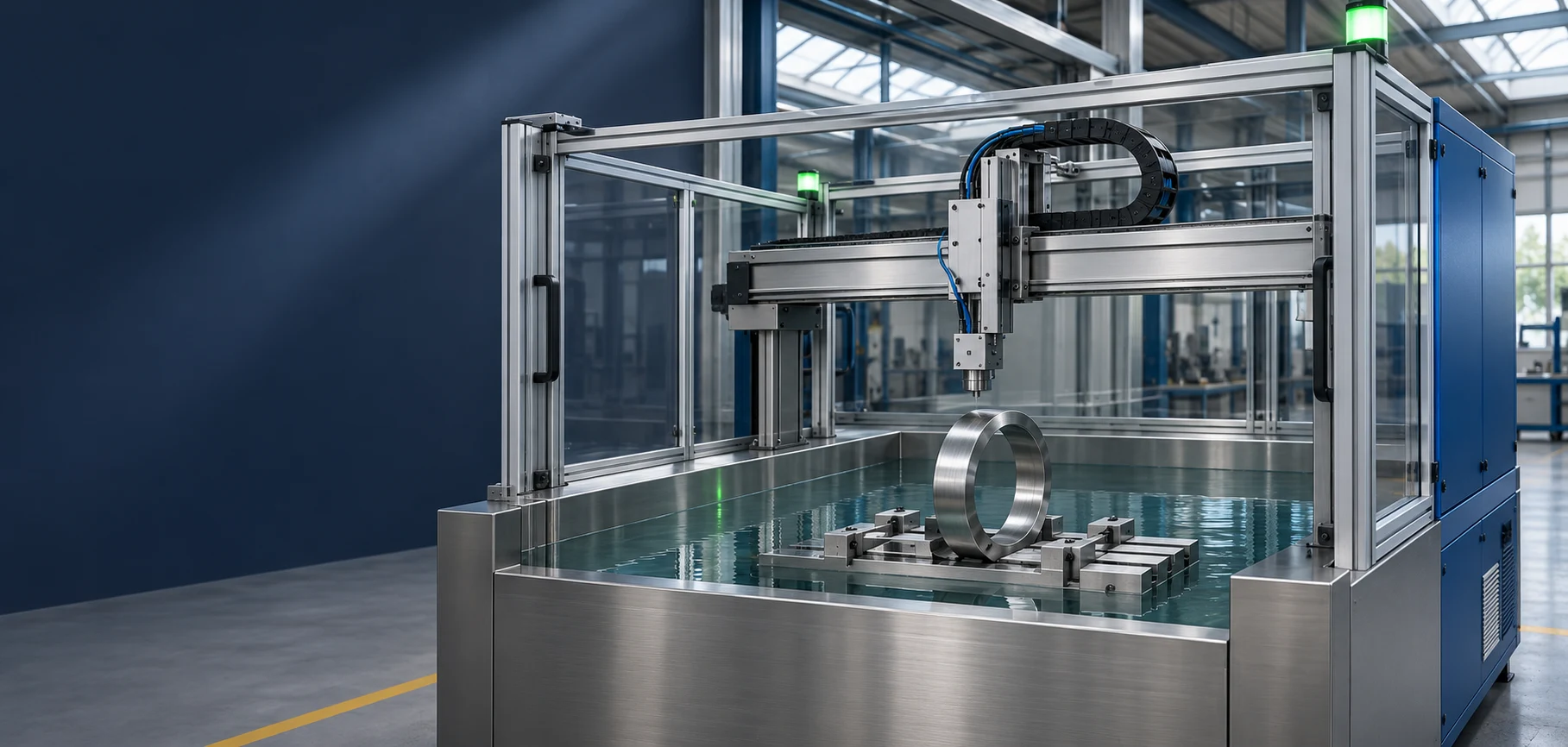
Automated non-destructive testing combines suitable sensors with controlled motion sequences, traceable evaluation and structured documentation. NPB NDT Consulting supports you in the technical planning and coordination of such inspection processes – from requirements analysis to support during system ramp-up.
When does automation make sense?
Recurring components, clearly defined inspection tasks and a predictable material flow can be good prerequisites. The benefit, however, depends on component variants, accessibility, surface condition and quality requirements. Technical feasibility should therefore be assessed before the level of automation is decided.
Comparison
Manual, semi-automated or fully automated.
| Approach | Focus | Typical | Points to consider |
|---|---|---|---|
| Manual inspection | FocusFlexible handling of changing tasks. | TypicalSingle parts, varying geometries, supplementary re-inspections. | Points to considerQualification, traceable execution and documentation. |
| Semi-automated inspection | FocusAutomating selected motion, acquisition or documentation steps. | TypicalRecurring tasks with manual process steps. | Points to considerClear hand-overs between operator and system. |
| Fully automated inspection | FocusIntegrating defined inspection sequences into a controlled material flow. | TypicalSeries processes with controlled boundary conditions. | Points to considerProcess monitoring, variant management, malfunctions and technical clarification cases. |
A higher level of automation is not the economically or technically best solution for every inspection task.
What has to fit together in an automated inspection process.
- 01
Inspection task
Which component is inspected, which requirements apply and which conclusions should the inspection allow?
- 02
Inspection technology
Method, sensors and accessibility must suit the task. In UT, for example, acoustic coupling and geometry are key boundary conditions.
- 03
Handling and positioning
Component guidance must allow suitable and traceable inspection execution.
- 04
Evaluation and clarification cases
Evaluation criteria, re-inspections and the handling of invalid inspections must be agreed.
- 05
Data and interfaces
Component identity, inspection status and agreed result data must be reliably assignable. Interfaces to QA or production systems are defined for each project.
- 06
Operation and qualification
Operation, regular system checks, maintenance and technical responsibility must work together in everyday production.
NPB NDT Consulting
Automated inspection in the material flow
Plan inspection, evaluation and clarification cases as one connected process.
- 01
Identify the component
Provision and unambiguous assignment
- 02
UT or ET inspection
Suitable inspection technology and controlled handling
- 03
Evaluate inspection status
Validity of the inspection and agreed criteria
Inspection valid · criteria met
Release as specified
Consider further release steps.
Deviation or invalid inspection
Quarantine and clarify technically
Initiate a defined re-inspection if required.
Document inspection status and context
Component reference · Program version · Agreed inspection data
Support
How NPB supports your automation project.
We structure technical requirements, support coordination with equipment suppliers and help coordinate inspection technology, production and quality. This includes classifying inspection sequences, preparing commissioning coordination, structuring documentation and system-specific familiarisation.
- Capture requirements and open points transparently
- Agree technical interfaces and responsibilities
- Bring the inspection concept and production conditions together
- Coordinate interim solutions and system ramp-up
- Structure documentation and evidence
- Involve operators, quality and the project team in implementation
Data
Digitalisation on a sound technical basis.
Digital inspection data create transparency when their origin and context are traceable. This includes, for example, component ID, inspection time, the inspection program used, result status and the associated documents. AI-based evaluation can be a development topic; its benefit must be demonstrated for the specific inspection task and embedded in a suitable evaluation process.
NPB NDT Consulting
Inspection data with traceable context
A result value becomes reliable evidence through its assignment.
Component identity
Component or batch ID
Unambiguous assignment
Inspection context
Instruction and program version
System and reference
Inspection data
Time and agreed data
Scope defined per project
Evaluation and roles
Result status and criteria
Responsibility and clarification steps
Digital inspection record
Link data and documents
Traceable records for quality and production.
In-depth articles
Which level of automation fits the inspection task?
Volume alone does not decide. Variants, material flow, clarification cases and support determine the useful scope of automation.
Automated ultrasonic testing: the process around the sensor
Stable UT needs suitable component handling, controlled coupling and a traceable response to interruptions.
Retrofit: improve existing inspection systems selectively
Before buying new equipment, assess the existing system. The key question is which requirements it can still meet reliably.
AI in NDT: define the inspection task before the model
AI can support evaluation. Dependable use requires suitable data, independent assessment and clear technical responsibility.
Are you planning or extending an automated inspection process?
Describe the component group, inspection task and desired timeframe. Together we will clarify which support makes sense.